For an English menu, write Toshikoshi Soba with the subtitle New Year’s Eve Buckwheat Noodles. That tells a first-time diner what the dish is and when it’s served. Use “year-crossing soba” in a caption if you want to explain the Japanese name.
Describe how your restaurant serves it
Lead with the noodle, then add the serving style and the topping that a guest can expect. Here are two options to copy and adapt.
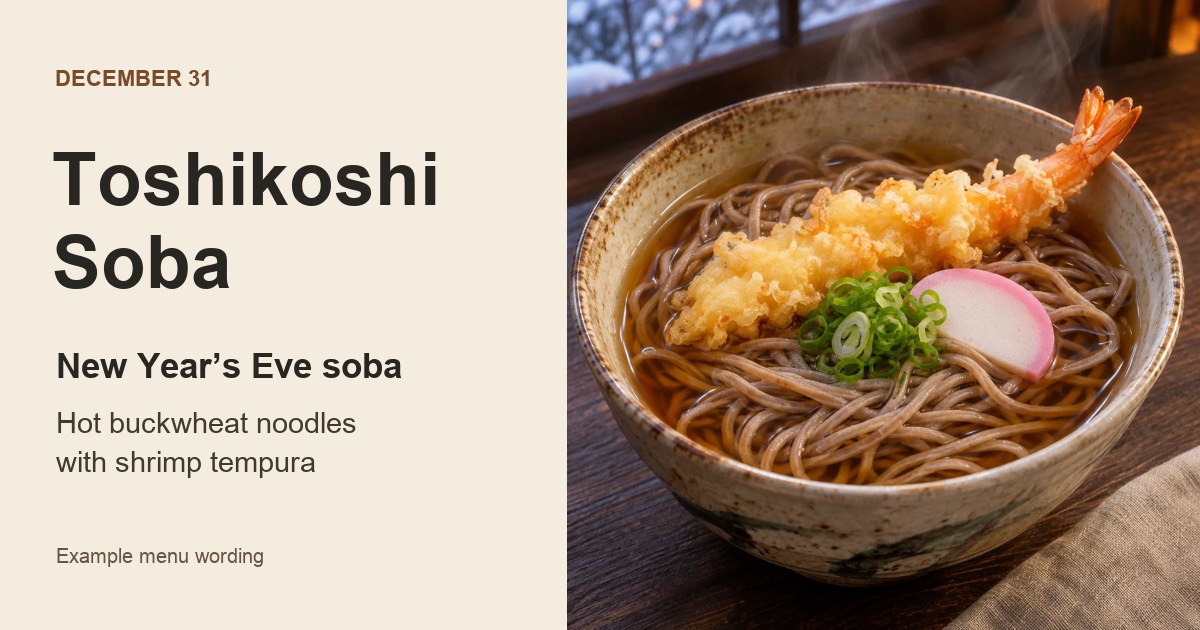
- Hot bowl: Toshikoshi Soba — Hot buckwheat noodles in broth with shrimp tempura and sliced green onions.
- Chilled plate: Toshikoshi Soba — Chilled buckwheat noodles served with a dipping sauce.
Use the hot version for a dish like the bowl in our AI-generated menu illustration. If a guest can order additional tempura, list it as an add-on so the description and photo don’t imply it’s included. Japan’s Ministry of Agriculture soba guide describes both soba served with a dip and soba served in warm broth.
Explain the tradition in a caption
On December 31 in Japan, people eat toshikoshi soba to see out the old year. The long noodles are often associated with a wish for a long life.
Use that version in an editorial caption or as a short note under a holiday menu. Japanese government sources record several explanations for the custom, including longevity. Present that as one interpretation. The date also helps readers distinguish the December 31 noodles from dishes served for New Year’s Day. See Highlighting Japan’s explanation of the custom and our guide to Japanese New Year dishes.