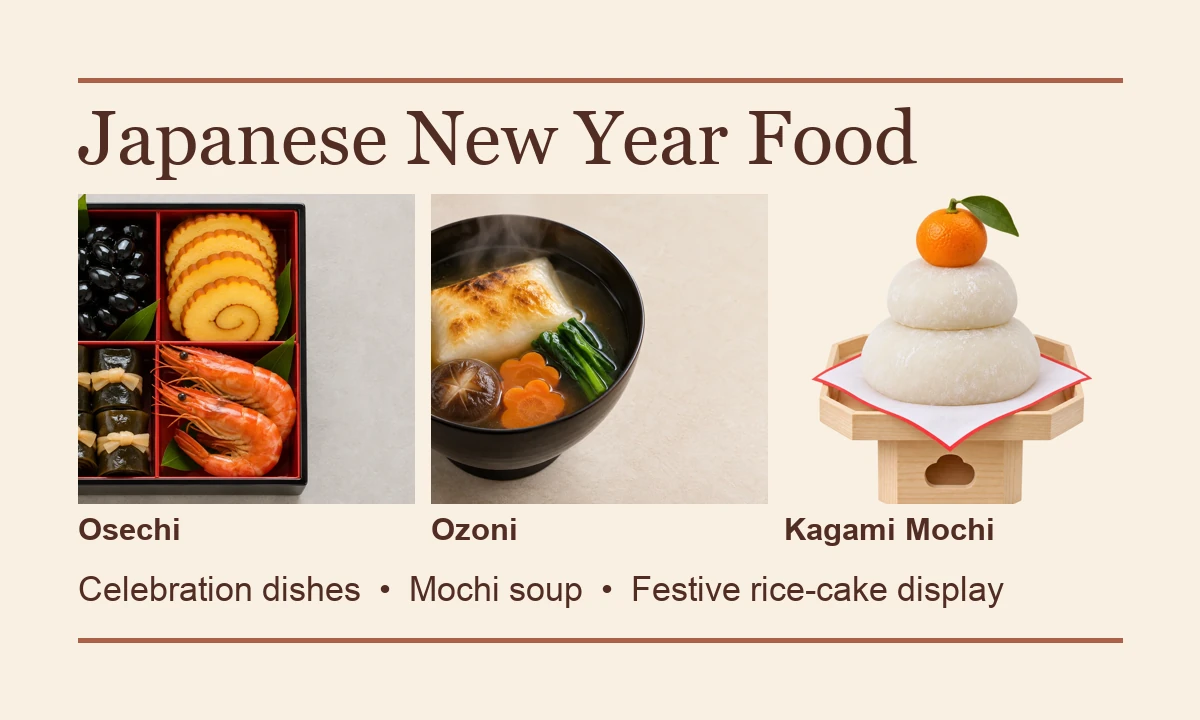
Three familiar sights at Japanese New Year are osechi, an assortment of celebration dishes; ozoni, a soup with mochi; and kagami mochi, stacked rice cakes displayed for the holiday. Use the guide below to tell them apart, then choose an illustrated slide or a single-dish card for your lesson, blog or social post.
Osechi: a box of celebration dishes
Osechi ryori is an assortment of dishes served around New Year. It is often presented in stacked boxes called jubako, with small portions arranged side by side. The selection varies across regions and households. Some foods carry wishes for the coming year. Black soybeans, for example, express a wish for health and longevity, while sweet-glazed dried anchovies are associated with hopes for a plentiful harvest.
Caption: Osechi ryori is a selection of Japanese New Year dishes, often arranged in tiers of lacquered boxes.
Ozoni: a New Year soup with mochi
Ozoni (also written zoni) is built around mochi, or rice cake. Tokyo’s version can use a clear broth with grilled mochi, chicken and greens. In Kyoto, a regional version uses white miso and round mochi. These examples give you two concrete bowls to compare in a lesson or a short article about regional cooking.
Caption: Ozoni is a Japanese New Year soup with mochi. The broth, toppings and shape of the rice cakes vary by region and household.
Kagami mochi: a New Year display
Kagami mochi is a New Year decoration and offering formed from stacked round rice cakes. The name means “mirror mochi,” a reference to its rounded shape. The cakes are later broken and eaten in a custom called kagami biraki. An English guide can describe the display and the later custom in separate captions.
Caption: Kagami mochi is a display of stacked rice cakes prepared for the Japanese New Year.
Use the three-food slide in a lesson or article
Show the slide before introducing the names. Ask learners to point to the holiday assortment, the soup and the rice-cake display. Then compare the two uses of mochi: in a bowl of ozoni and as the stacked centerpiece. For a narrow layout or a post about a single dish, use the portrait ozoni card above.
For individual illustrations, browse osechi, ozoni and kagami mochi. See the Stock Tour Asset License for usage terms.