Tōji (冬至) is the Japanese name for the winter solstice, the day with the least daylight in Japan. Two traditions associated with it are taking a bath scented with yuzu citrus and eating kabocha squash. In Japan, the 2026 solstice falls on December 22.
When is the winter solstice in Japan?
Japan’s winter solstice usually falls around December 21 or 22. The National Astronomical Observatory of Japan’s calendar puts it at 5:50 a.m. Japan Standard Time on December 22, 2026. The same instant falls on December 21 in some other time zones, so use Japan time when giving the date for a Japanese event.
The solstice is an astronomical event, but people generally use tōji to refer to the day as well. You can describe it in a classroom or newsletter as the point in the year when the daylight hours are shortest, before days begin to lengthen again. The number of daylight hours depends on where you are.
What is a yuzu bath?
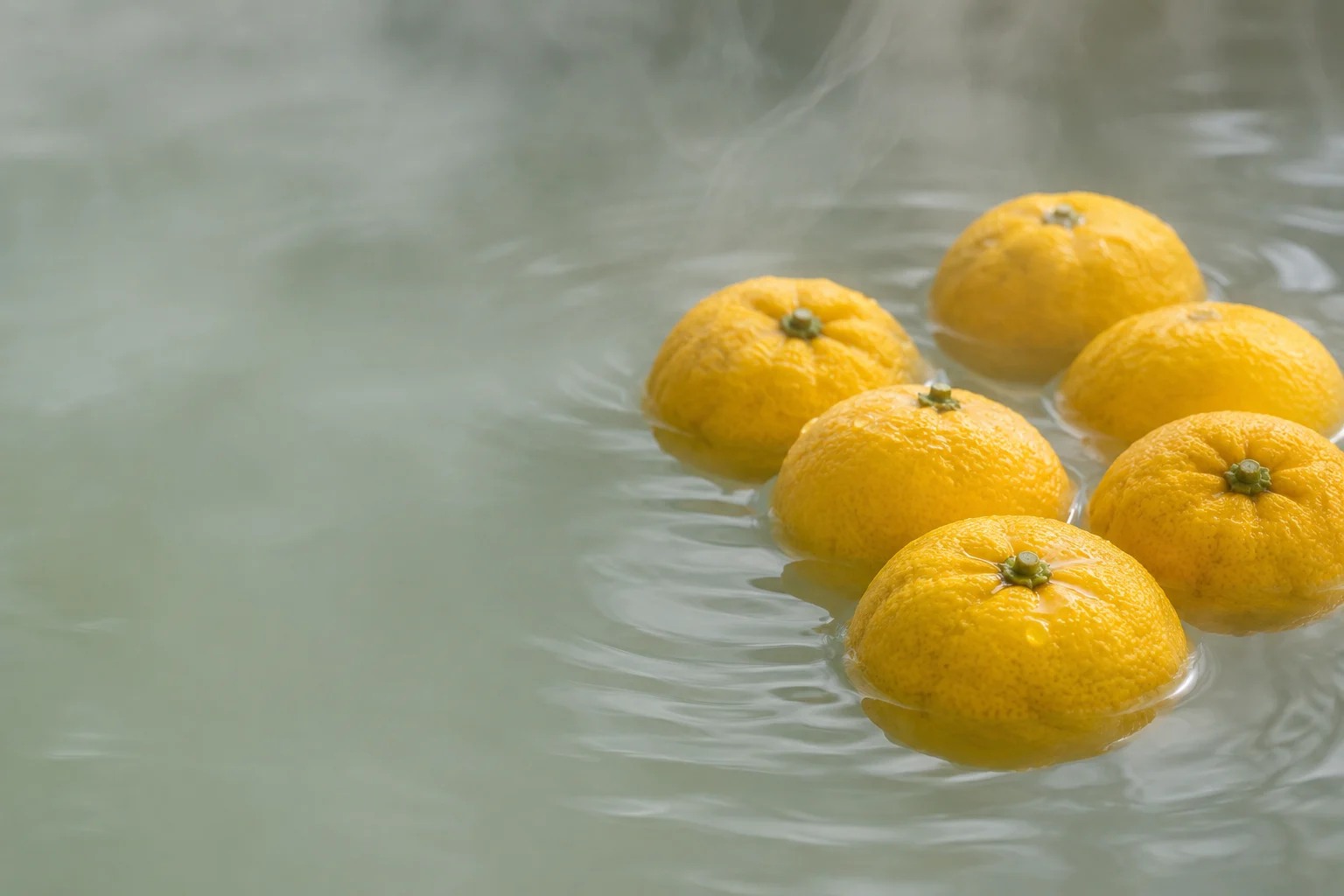
A yuzuyu (柚子湯) is a bath with yuzu, a fragrant citrus fruit. The fruit is placed in the bathwater so its scent is part of the experience. Japan’s Ministry of Agriculture, Forestry and Fisheries notes winter solstice bathing among the uses of yuzu, alongside quite different uses of the peel and juice in cooking.
In English, “yuzu bath” is usually all the translation a reader needs. If the audience has never heard of yuzu, add “a fragrant Japanese citrus” on first mention. “Bath with yuzu fruit” works especially well in a caption because it tells readers what the yellow fruit is doing in the water.
The Tokyo multicultural community guide describes several explanations for the custom, including an association between the scent and warding off misfortune. You can describe the bath as a seasonal wish for well-being. Keep those beliefs in the realm of folklore when you write about them.
Why eat kabocha on the winter solstice?
Kabocha is a squash often called Japanese pumpkin in English. It could be stored and eaten in winter, which helps explain why it became part of a midwinter meal when fewer fresh foods were available. The Tokyo guide also describes a folk association between nankin, an older name for the squash, and un, the Japanese word for luck.
For an English-language food story, introduce the ingredient as “kabocha squash,” then use “kabocha” on its own. A bowl of simmered kabocha is one example of how the squash can appear at the table. If you are captioning this illustration, describe the visible squash rather than guessing its seasoning or presenting it as a photo of someone’s dinner.
Simple captions for a newsletter, slide, or article
Choose the yuzu bath image for a piece about the custom, the simmered squash for a story about the meal, or the whole and sliced yuzu for a short ingredient introduction. Pair each image with a caption that names the subject before explaining why it matters.
- Calendar slide: “Tōji is the winter solstice in Japan. In 2026 it falls on December 22, Japan time.”
- Yuzu bath: “A yuzu bath is a Japanese winter solstice custom in which fragrant citrus fruit is placed in the bathwater.”
- Food newsletter: “Kabocha, or Japanese winter squash, is traditionally eaten around the winter solstice.”
Use these three AI-generated illustrations as visual explanations and label them as illustrations in contexts where readers expect documentary photography. Select an image to open its detail page, check the Stock Tour Asset License, and download the WebP. For the next seasonal story, see our guide to Japanese New Year food.