Write the number of courses and the price per person at the top of your prix fixe menu. Tell guests whether the courses are set or whether they choose a dish, and put any extra charge next to the option that triggers it. The two examples below are sample menus with illustrative prices.
Example 1: A set menu with one dish per course
Use “set menu” when all guests receive the same courses. If drinks are separate, say so on the menu before guests choose.
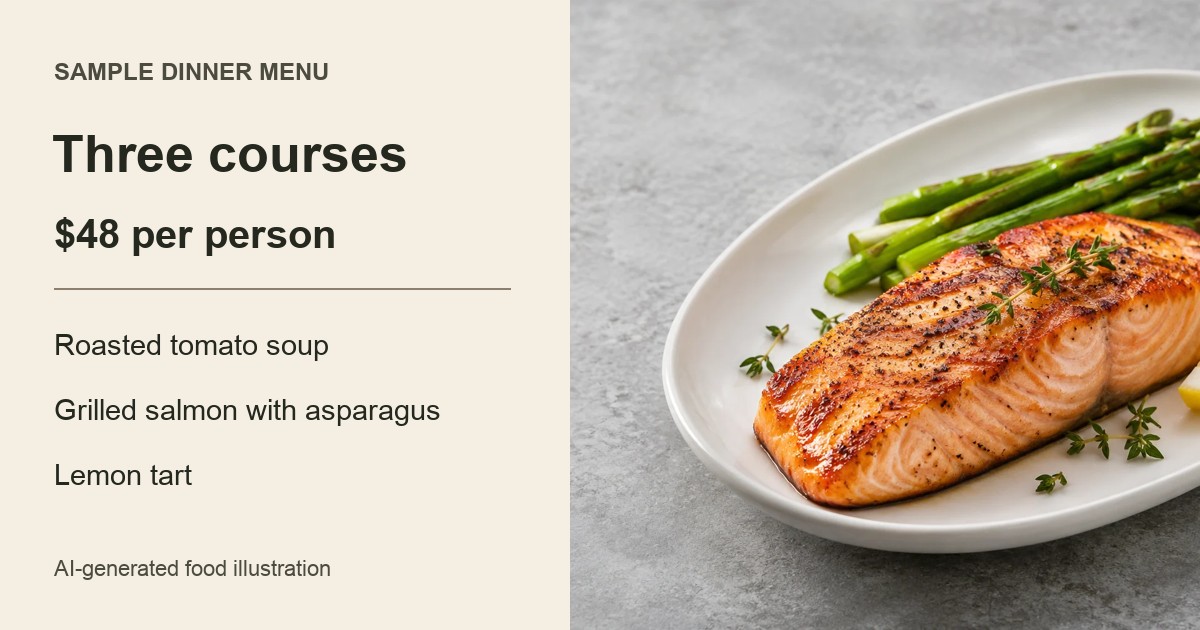
Three-Course Dinner · $48 per person
Starter: Roasted tomato soup
Main: Grilled salmon with asparagus
Dessert: Lemon tartDrinks are priced separately.
Example 2: A choice of dishes with an optional upgrade
Keep “Choose one dish from each course” directly below the price. Mark an upgrade within the list where the guest makes the choice. “Add $12” is plain English for an additional charge. The word “supplement” is also common on prix fixe menus.
Three-Course Prix Fixe · $48 per person
Choose one dish from each course.Starter: Roasted tomato soup or mixed greens
Main: Grilled salmon, mushroom risotto, or ribeye steak (add $12 per person)
Dessert: Lemon tart or chocolate mousseOptional wine pairing: $22 per person.
In this example, a guest ordering the salmon pays the $48 menu price. A guest choosing ribeye pays $60 for the meal. The pairing is a separate choice. If an extra is for the whole table, label it “per table” and use the amount you actually charge.
Check the first screen or printed panel
Check that a guest can find the course count, base price, and selection rule together. Then check each added-cost item where it appears. Cambridge Dictionary describes the fixed-price usage. Fork’s published menu illustrates the use of course choices and a charge on a specific entrée, and Troubadour’s dinner menu shows how an add-on can also have a table-wide participation condition. Use wording that matches your own service.
If you’re laying out a printed version, see how to arrange a dinner menu card. For a public menu that shows what guests can order, photograph the dish as your kitchen serves it. A stock illustration works for a sample layout like the one above.