Edible seaweeds for cooking come in broad strips, thin sheets, fine strands, and even clusters that look like tiny grapes. Kombu gives dashi its base, wakame softens into leaves for miso soup, and a pinch of aonori brings green flecks to the top of okonomiyaki. The form matters because each seaweed behaves differently in a dish.
This visual guide compares seven seaweeds used in Japanese cooking. The captions show whether each image depicts dried strips, a rehydrated leaf, chopped seaweed, or another prepared form. Use the guide to choose a seaweed for broth, a topping, or a chilled side.
Seaweeds for Broth and Soup
| Seaweed | What it looks like | How to use it |
|---|---|---|
| Kombu | Broad, leathery strips. | Steep it in water as the base for dashi. |
| Wakame | Thin, soft green leaves after soaking. | Add prepared wakame to miso soup or a cucumber salad. |
Sheets and Flakes
| Seaweed | What it looks like | How to use it |
|---|---|---|
| Toasted nori | Thin, flat sheets, usually dark green to near black. | Wrap rice balls or snip into strips for a topping. |
| Aonori | Fine dried green flakes. | Sprinkle on okonomiyaki just before serving. |
Seaweeds for Chilled Sides and Rice
| Seaweed | What it looks like | How to use it |
|---|---|---|
| Mozuku | Slender, slippery strands. | Serve prepared mozuku chilled with a vinegar dressing. |
| Mekabu | The ruffled base of wakame, often sold chopped with a sticky texture. | Spoon prepared chopped mekabu over rice. |
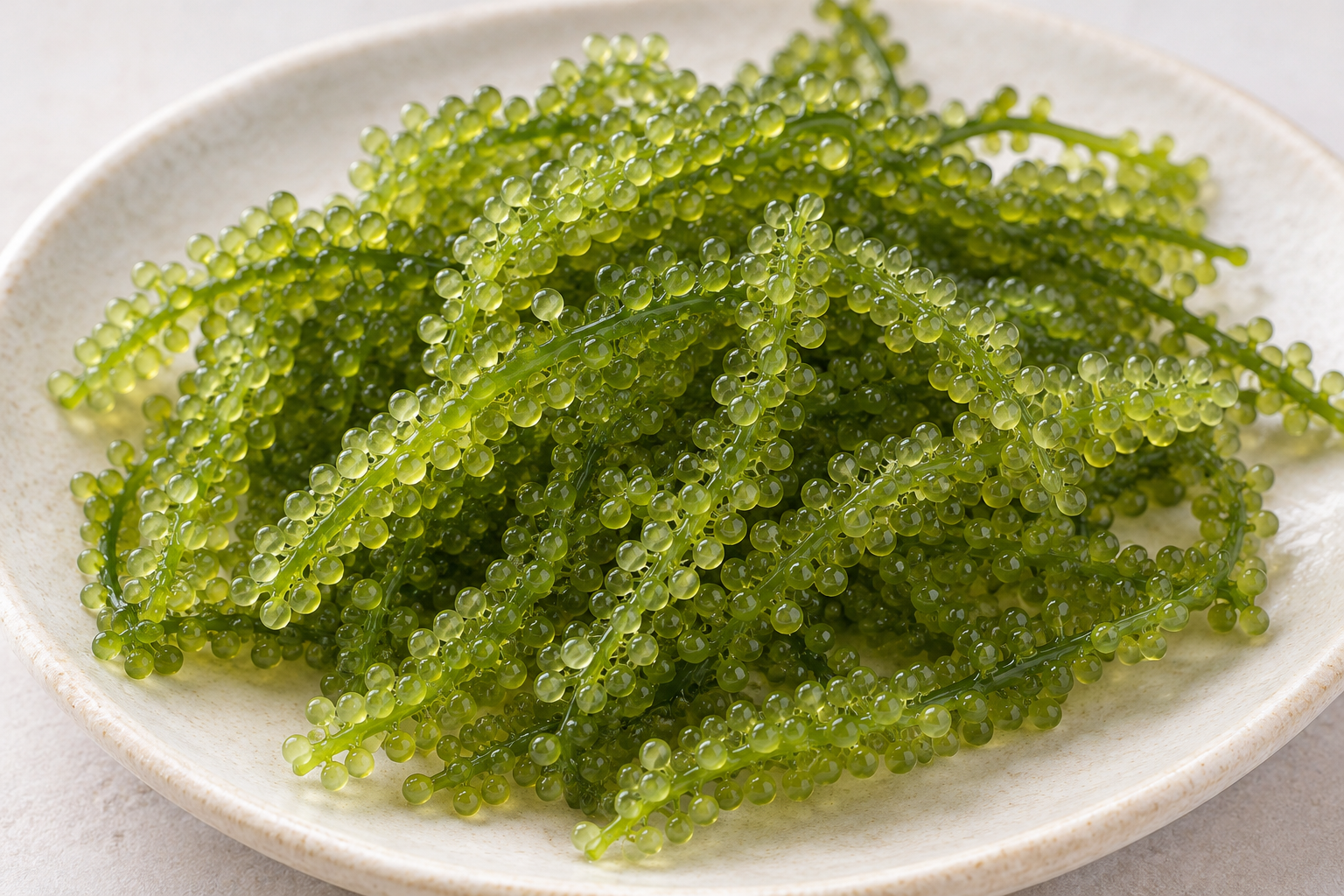
| Sea grapes (umibudo) | Tiny green beads attached to branching stems. | Serve as a chilled side dish with dressing on the side. |
Choose a Texture for the Dish
Use a sheet of nori when you want a wrapper, chopped mekabu for a soft topping, or whole sea grape sprigs for their bead-like shape. If you buy a dried or salted product, follow its package directions for soaking or rinsing.
For more on traditional Japanese seaweed products, see Japan’s Ministry of Agriculture, Forestry and Fisheries.
These Stock Tour images were generated with AI. Select an image to see its download and license details.
Explore the black foods list or the edible mushrooms guide.