Shiitake, maitake, shimeji, enoki, and oyster mushrooms can all go into a soup or a pan, but they bring different shapes and textures. Shiitake has a broad cap you can slice, king oyster has a thick stem you can sear in planks, and maitake tears into small clusters with edges that crisp in the oven.
This guide compares nine cultivated edible mushrooms sold for cooking. Each entry shows the cap, stem, or cluster that helps you tell them apart at the market, plus one way to use them. Use labeled mushrooms from a food retailer. Do not use these illustrations to decide whether a wild mushroom is safe to eat.
Mushrooms with Broad Caps or Thick Stems
| Mushroom | What it looks like | How to use it |
|---|---|---|
| Shiitake | Rounded brown caps with pale gills. | Slice the caps for soup or roast them whole. |
| King oyster (eringi) | Thick, white stems topped with relatively small tan caps. | Slice lengthwise into planks and sear until browned. |
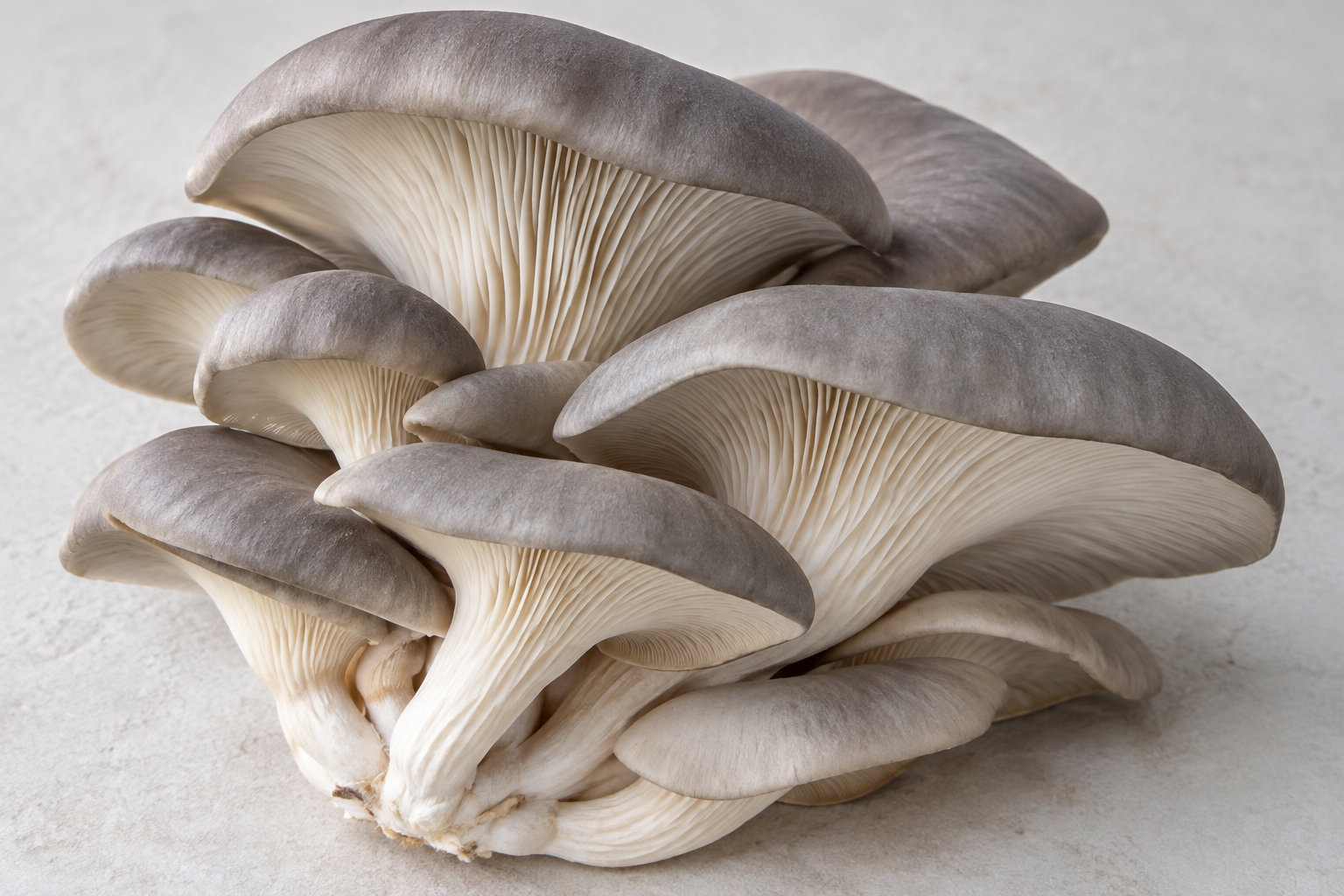
| Oyster mushroom | Fan-shaped caps with pale gills that run down short stems. | Tear into broad strips and sauté in a hot pan. |
| White button mushroom | Smooth, rounded white caps and short stems. | Quarter for roasting or slice into a cream sauce. |
Clustered and Thin-Stemmed Mushrooms
| Mushroom | What it looks like | How to use it |
|---|---|---|
| Maitake | Thin, overlapping brown fronds in a ruffled cluster. | Tear into clusters and roast to crisp the edges. |
| Brown shimeji | Small, rounded brown caps and pale stems in a tight cluster. | Trim the shared base, separate the stems, and sauté. |
| White enoki | Long, slender white stems and tiny caps. | Trim the base, separate the strands, and cook thoroughly in soup or a hot pot. |
| Nameko | Small glossy amber caps and pale stems. | Simmer in miso soup or add cooked nameko to a grated-daikon side dish. |
Thin, Folded Mushrooms
| Mushroom | What it looks like | How to use it |
|---|---|---|
| Black wood ear | Dark, thin folds with an ear-like outline. | Slice prepared mushrooms and cook them in a stir-fry for a springy texture. |
Which Mushroom Fits the Dish?
- For browning in a pan: slice king oyster into planks or quarter white button mushrooms.
- For soup: simmer nameko or cook separated enoki strands thoroughly in the broth.
- For crisp or springy texture: roast torn maitake for crisp edges, or cook strips of wood ear in a stir-fry.
These Stock Tour images were generated with AI. Select an image to view its download and license details.
References
- USDA Food Safety and Inspection Service on mushroom safety
- CDC guidance on cooking enoki mushrooms thoroughly
Also see the brown foods list and the white foods list.