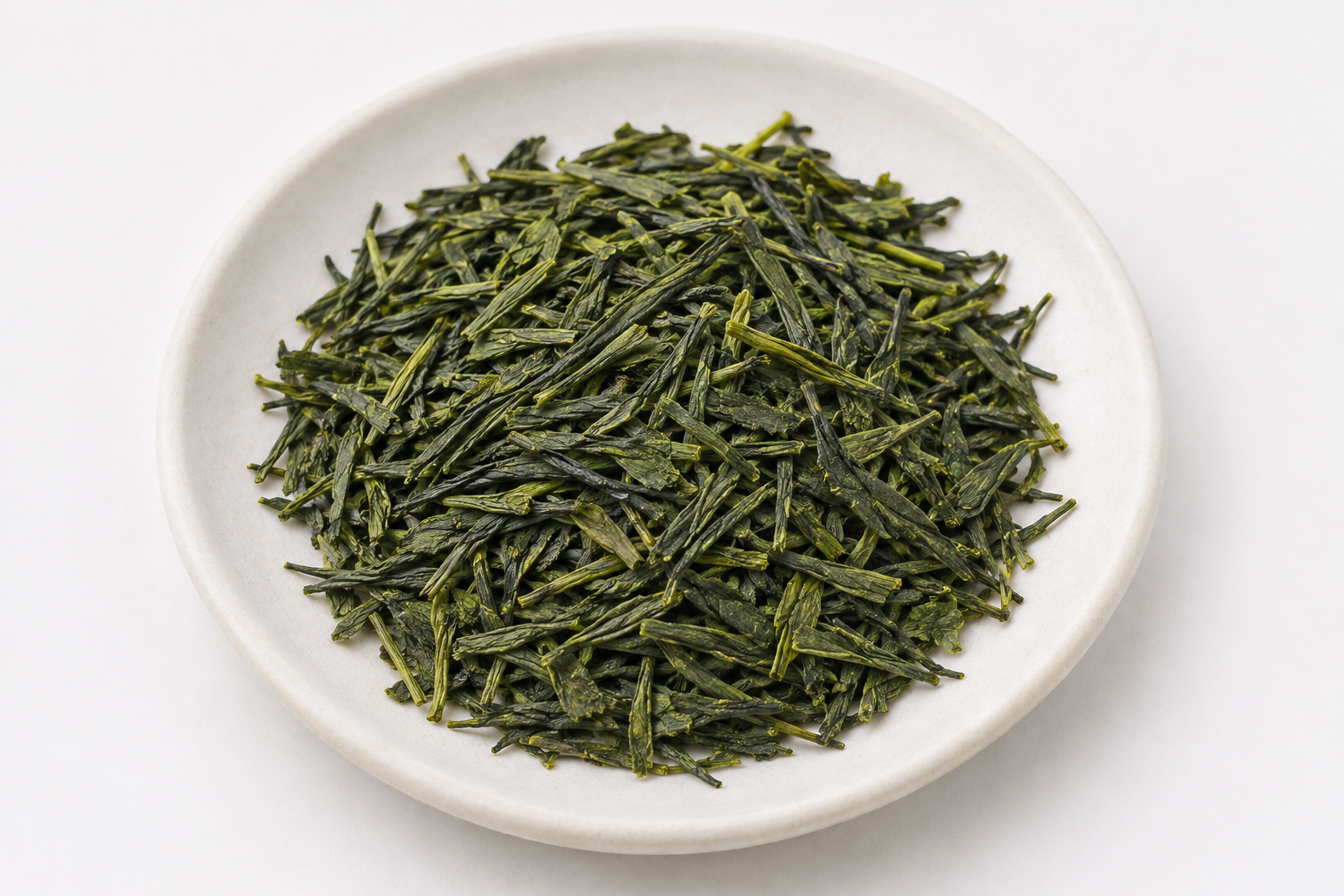
Dry tea can look like slender green needles, tightly rolled beads, toasted fragments, or a fine green powder. Those shapes reflect how the tea was processed and give you a first clue about how to prepare it. Sencha often makes a pale, fresh-tasting cup, while roasted hojicha can give an amber brew and a toasted aroma.
This photo guide explores six styles, including Japanese green teas, rolled oolong, and loose black tea. Each picture shows the dry ingredient. Use the tasting notes to choose a style and follow the package directions as a starting point, since a tea’s cut and processing affect how quickly it infuses.
Japanese leaf teas
Look for the difference between green needles, brown roasted leaves, and tea mixed with toasted rice.
| Ingredient | Image | How to use it |
|---|---|---|
| Sencha | The dark green, needle-like leaves can brew a pale yellow-green cup with a fresh, vegetal aroma. Try water around 80°C (176°F) as a starting point for everyday sencha. | |
| Hojicha | Roasting turns the leaf pieces reddish brown and gives the amber drink a toasty aroma. Steep briefly in hot water and strain. | |
| Genmaicha | Look for toasted rice kernels among green tea leaves. The brew is often pale yellow and smells of toasted grain. Serve plain to bring out that aroma. |
Rolled oolong and loose black tea
Dry pieces may be tightly rolled or twisted into thin strands. Give the leaves room to unfurl in the pot.
| Ingredient | Image | How to use it |
|---|---|---|
| Rolled oolong | Compact dark green beads open as they steep. A lightly oxidized rolled oolong can produce a clear golden cup with floral notes. Try a second steep and compare it with the first. | |
| Black tea | Twisted dark leaves can brew an amber to copper-red cup. An Assam-style black tea can taste malty and hold up to a splash of milk. |
Powdered tea
Use a whisk to disperse fine powder evenly in water.
| Ingredient | Image | How to use it |
|---|---|---|
| Matcha | Finely ground tencha becomes a vivid green powder. Sift it into a bowl and whisk with warm water. The powder stays in the drink and gives it an opaque green color. |